Home / Vin Jaune
The expert guide
Vin Jaune from the Jura: history, winemaking under the veil, ageing and cellaring
Vin Jaune is a dry white wine from the Jura, made only from Savagnin and aged for at least six years in barrel under a veil of yeast, without ever being topped up. Neither fortified nor sweetened, it draws its complexity from time, air and living flora. Here, step by step, is how it was born, how it is made, why cellar and attic do not make the same wine, and how it crosses the centuries.
How Vin Jaune was born
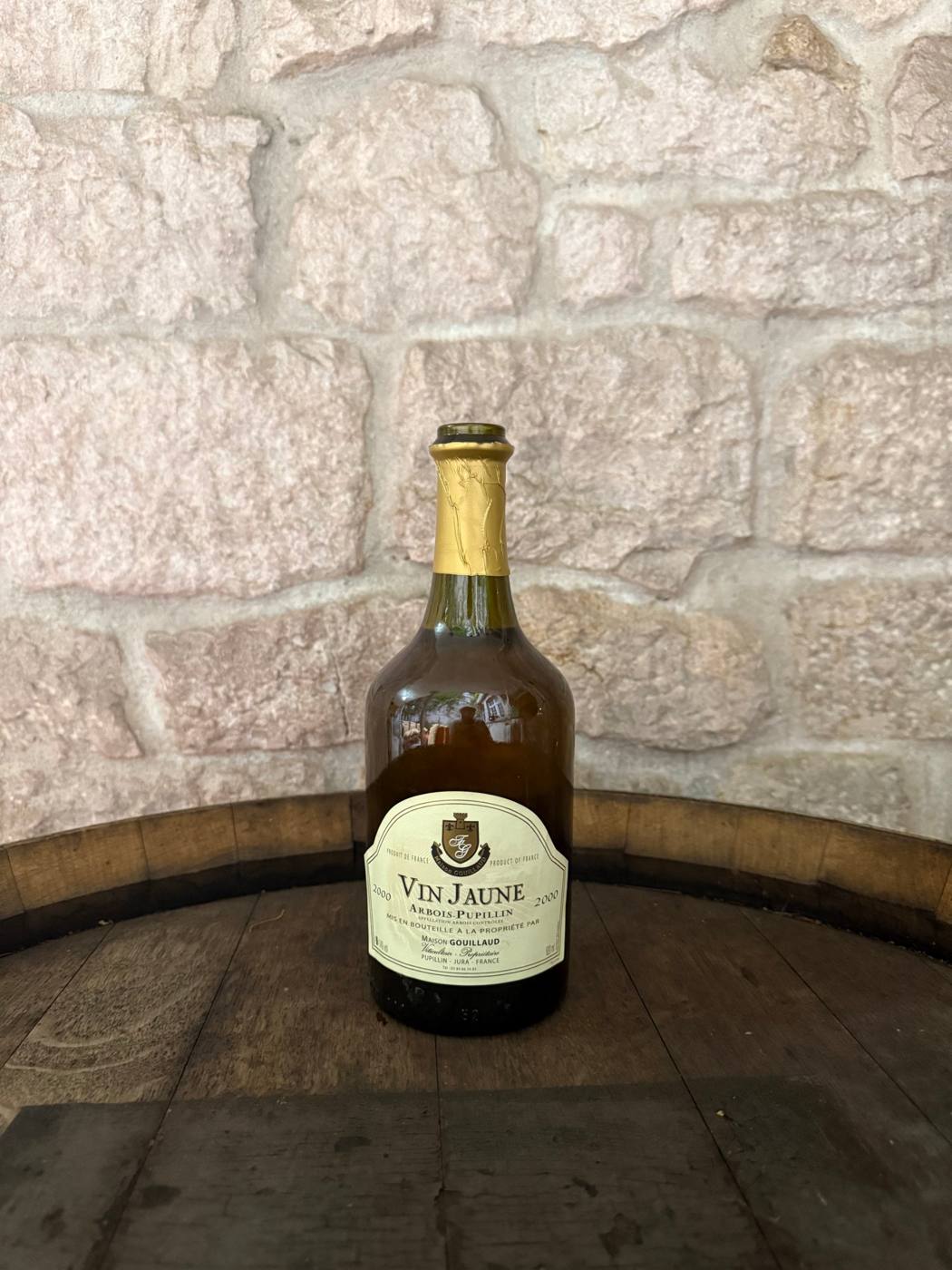
Vin Jaune is inseparable from Château-Chalon, a village perched on a rocky promontory above the Seille. Its history is bound up with the abbey of Notre-Dame, first mentioned with certainty in a charter of 869. At first a convent of nuns, from the 13th century it became a chapter of canonesses drawn from the Comtois nobility. The religious community owned the vines, had the harvests guarded and proclaimed the start of the grape harvest. The legend of a barrel forgotten at the back of a cellar, turned to nectar instead of vinegar, is probably too good to be true, but it captures the essential: Vin Jaune is born of an ageing method that defies the usual rules.
Savagnin is far older than Vin Jaune. In the 13th century Count Étienne of Burgundy already kept a vineyard of this grape for himself, harvested at the first frosts. The wines of Château-Chalon were served at a banquet of sovereigns in Bruges in 1375, and Margaret of Austria and later Mary of Hungary had them sent to their courts. But these “vins de garde” were not yet today’s Vin Jaune: a 1771 text on the wines of Arbois even asked for barrels to be kept full. The term “vin jaune” only appears in writing in the early 19th century, and descriptions move closer to current practice during that century, with no identified inventor.
The most famous bottles date from 1774. Made by the Arbois grower Anatoile Vercel (1725–1786) and kept for eight generations in a vaulted cellar in Arbois, they are 87 cl Burgundy-shaped bottles. Tasted in 1994 by twenty-four professionals, they scored 9.4 out of 10, with notes of walnut, spice and curry. One bottle sold for 57,000 euros at the 2011 Percée, another for 103,700 euros in 2018.
In the 19th century Louis Pasteur, born in Dole and attached to Arbois, set up a laboratory in the town in 1863 and studied wine with his grower friends. He distinguished the “flower of wine”, which gives Vin Jaune its bouquet, from the “flower of vinegar”, which spoils it, and published his Études sur le vin in 1866, noting that studying this wine was among the most illuminating work he had done. The Château-Chalon producers’ union was founded in 1933 and the appellation recognised in 1936, the same year as Arbois. Since 1996 the Percée du Vin Jaune has celebrated each February the release of the new vintage.
Savagnin, the vineyard and the terroir
Vin Jaune knows only one grape: white Savagnin, also called Naturé in the Jura (the name appears in a 1771 text), Heida or Païen in the Valais, and Traminer in German-speaking countries. The name “Savagnin blanc” is only attested in 1732, in the list of good vines drawn up by the Besançon parliament, but the vine itself is much older. In 2019, genetic analysis of a pip found in Orléans and dated between 1050 and 1200 revealed a clonal identity with today’s Savagnin: the same lineage, propagated by cuttings for some nine centuries. Its birthplace is still debated, between the Alps, the Rhine basin, the Palatinate and Franche-Comté; the Jura is, in any case, its great conservatory.
Genetically, Savagnin is a central grape of European viticulture: it is notably a parent of Sauvignon Blanc, and some thirty varieties are related to it. Savagnin Rose and Gewürztraminer are mutations of it. It covers only about 1,500 hectares worldwide. Its leaves are small and three-lobed, its bunches small and compact, and its thick-skinned berries resist grey rot well; it is, however, sensitive to trunk diseases. Above all, it accumulates a lot of sugar while keeping high acidity, the ideal material for long ageing.
It finds its chosen ground on the blue and grey marls of the Lias, below the limestone cliffs of the Revermont. In Château-Chalon the vineyard rises between 250 and 350 metres on a marl slope beneath a cliff, in a very wet semi-continental climate: over 1,100 millimetres of rain a year, cold winters and hot summers. These marls quickly turn from sticky paste to a hardness that stops tools, and the slope means harvesting by hand. Harvest is late, often in October; the Château-Chalon decree requires 12% potential alcohol and caps yields at 20 hectolitres per hectare.
Winemaking, step by step
Harvest and pressing. Grapes are picked by hand and pressed gently: crushing is forbidden. The must is lightly sulphited, then settled for about a day to remove the coarse lees.
Alcoholic fermentation. Carried out by Saccharomyces cerevisiae yeasts, often between 18 and 23 °C to preserve aromas and avoid volatile acidity. Savagnin must foams a lot, so room is left in the tanks.
Malolactic fermentation. It is completed in full, topped-up vessels to avoid premature oxidation. A racking then degasses and cleans the wine. The ideal base wine is between 13 and 13.5%: above 14% it becomes hostile to the veil yeasts.
Filling the barrels. The wine goes into used 228-litre Burgundy pièces: the taste of new oak is not wanted. Many wait until the end of spring of the second year, about eighteen months after harvest. Sulphiting is very light, and the bung is simply laid on to let air through.
The ullage and the veil. The barrel is not filled to the brim: an air space is left, sometimes by drawing off 5 to 10 litres. This is the most delicate phase, as the surface is exposed before the veil protects it. Some growers seed with veil yeasts, taken from good barrels or selected by the Poligny laboratory since the 1960s; these later give way to strains from the wine and the cellar.
The life of the veil. Saccharomyces cerevisiae yeasts with a particular ability to cluster and float form a biofilm on the surface. They breathe oxygen and feed on the wine’s ethanol and glycerol. They produce ethanal: a few tens of milligrams per litre in an ordinary white wine, several hundred in a Vin Jaune. Ethanal and alpha-ketobutyric acid form sotolon, the molecule of walnut and curry. Strains evolve over the years, and each barrel often ends up with its own.
Ageing without topping up. The barrel is never topped up until 15 December of the sixth year after harvest, including at least sixty months under the veil. “Six years and three months” is the total duration, not six years of continuous veil. The grower monitors with a pipette and lab analyses; barrels that turn acetic or grow unwanted thick veils are set aside.
Blending and bottling. After six or seven years the surviving barrels are tasted and blended: the best barrel on its own is often inferior to the blend. The wine rests at least three months in tank before bottling in the 62 cl clavelin, the only permitted bottle.
Ageing in cellar, attic or old stable
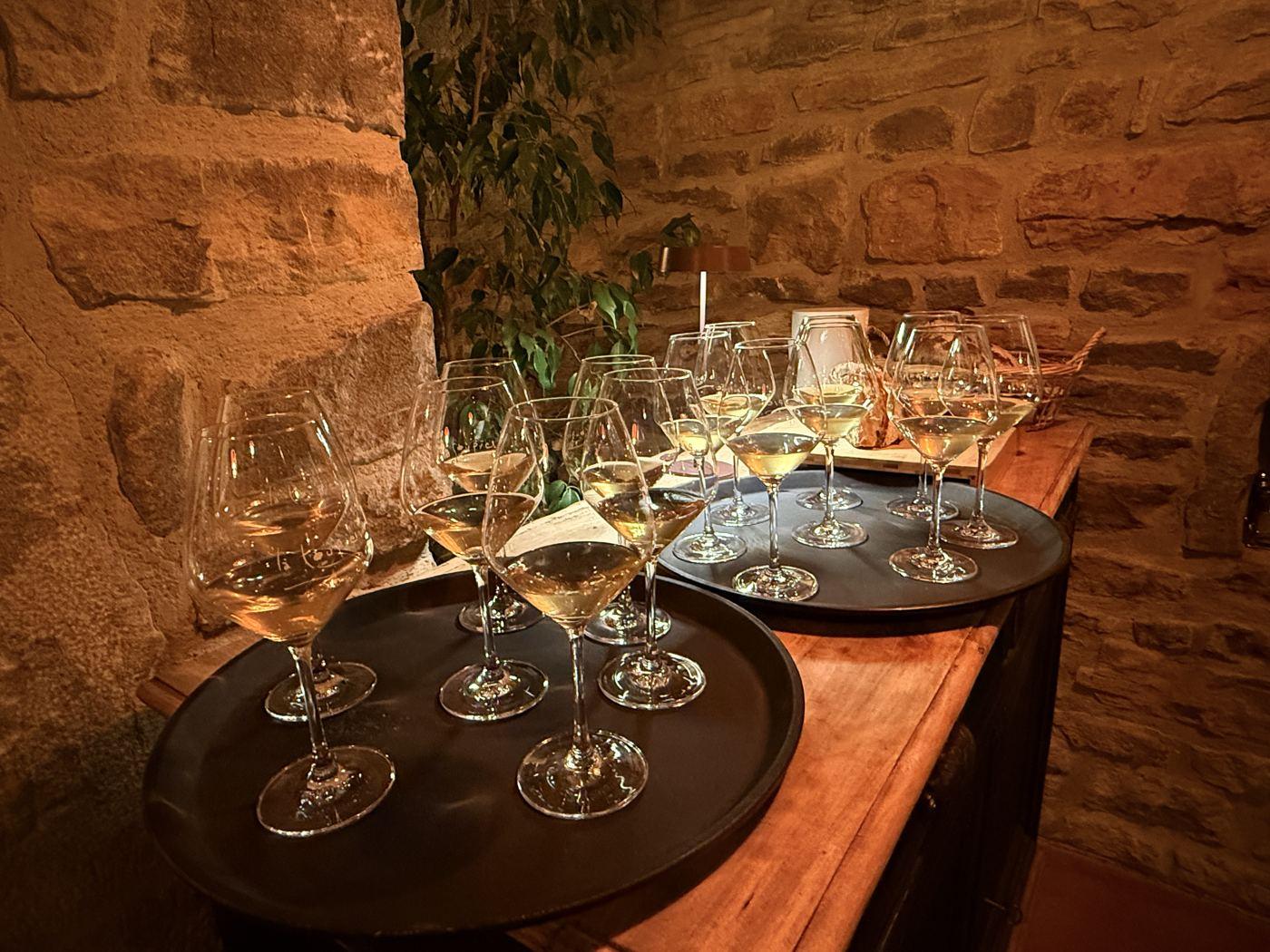
The veil is alive and responds to its climate. Work by the departmental laboratory in Poligny showed that Savagnin wines develop better in dry, well-ventilated spaces: air circulation and low humidity help the veil settle. In one poorly ventilated cellar, simply opening the doors was enough to restart the wines’ evolution.
Attics, very dry and hot, speed up the veil and evaporation but can over-concentrate the wine. Damp underground cellars, on the other hand, slow the veil down. Old stables often offer a good compromise. In Château-Chalon most wines age in true cellars cut into the limestone: since the rock stands high, they are naturally dry, easy to ventilate and temperate.
The alternation of seasons matters too: it may enrich the wine by alternating periods of yeast multiplication and die-off. Many estates age barrels in several spaces and then blend these different temperaments, which often gives the best results. The choice of place marks the wine so strongly that differences between two producers of the same appellation can be greater than between two appellations.
Cellaring Vin Jaune
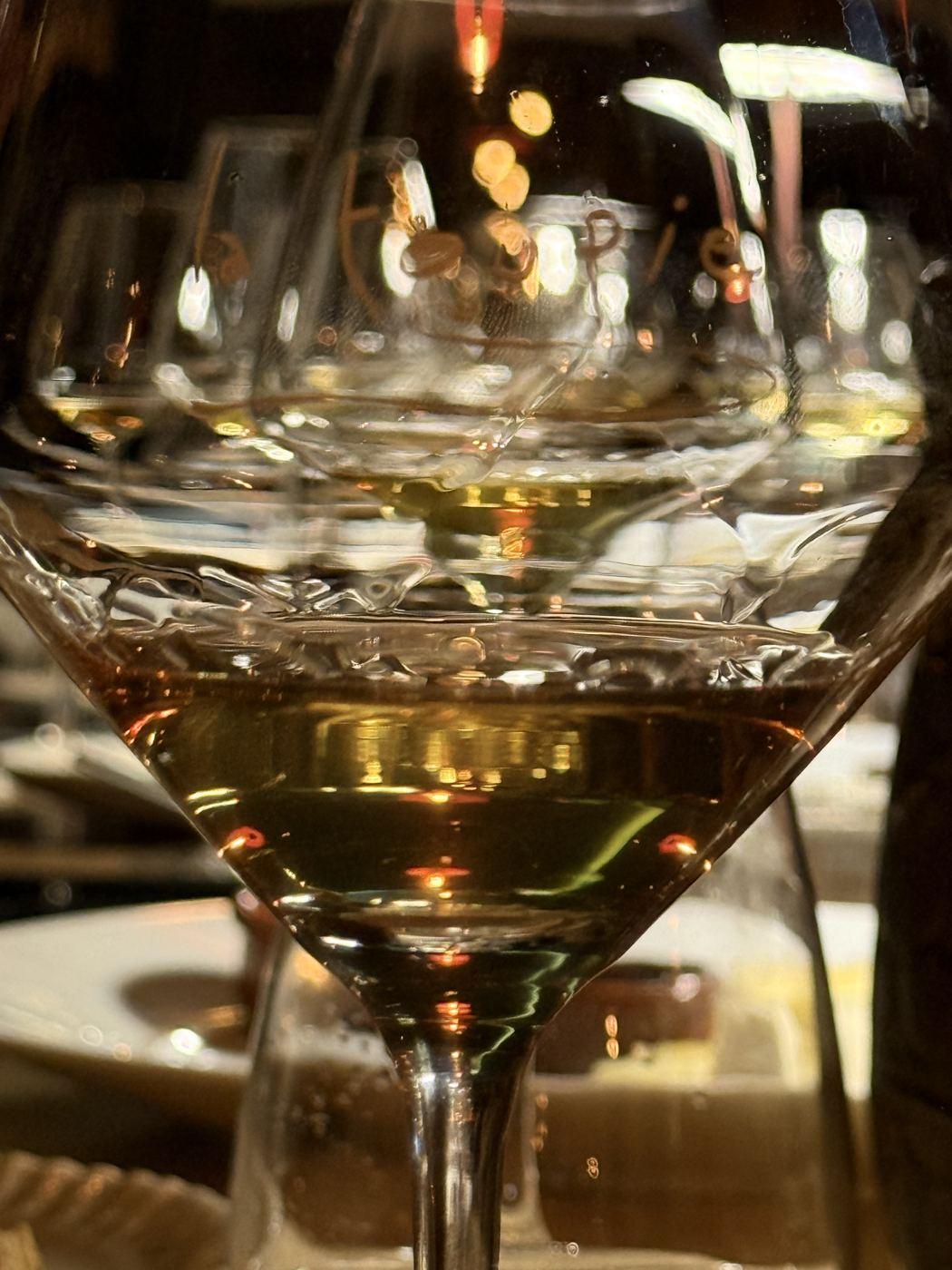
Vin Jaune is among the white wines best suited to ageing. Its acidity, its oxidative ageing and the stability gained under the veil let it develop favourably for decades; tastings of very old wines show they keep gaining complexity. Sotolon continues to form in the bottle, which explains the intensity of old vintages.
This longevity is not an absolute guarantee, though: acidity and pH, microbiological condition, oxygen at bottling, the cork and storage conditions all act together. Young, between seven and ten years, Vin Jaune shows green walnut, apple and cutting acidity; mature, between ten and twenty-five years, curry, morel and toasted almond; beyond that, beeswax, honey and coffee.
In the cellar, keep the clavelin away from light, cool and at a constant temperature. Once opened, recorked and kept cool, it lasts several weeks. Serve it at 15–17 °C: too cold, it gives fewer aromas; too warm, the alcohol shows.
The Vin Jaune estates at Sous Voile
The growers in our selection, from Château-Chalon to Arbois. Each page presents the estate, the appellation and the style.
- Domaine Jean Macle · Château-Chalon — One of the historic reference estates of the Château-Chalon appellation.
- Domaine Ganevat · Côtes du Jura · Vin Jaune
- Domaine Berthet-Bondet · Château-Chalon
- Domaine Pignier · Côtes du Jura · Vin Jaune
- Domaine Rolet · Arbois · Vin Jaune
- Fruitière Vinicole d'Arbois · Arbois · Vin Jaune
- Domaine François Rousset-Martin · Château-Chalon — In Nevy-sur-Seille, just south of Château-Chalon, François Rousset-Martin took over the family estate in 2007 after studying oenology. His wines, made plot by plot, now appear on great wine lists in Paris, Tokyo and New York.
Frequently asked questions
Is Vin Jaune a fortified wine?
No. Unlike sherry, Vin Jaune is not fortified: no alcohol is added. All its power comes from Savagnin and ageing under the veil.
How does it differ from fino sherry?
Both age under a veil of yeast. But fino is fortified and blends several years in a solera, whereas Vin Jaune is a single-vintage, unfortified wine aged at least six years in the same barrel.
Why does the clavelin hold 62 cl?
It is said to be what remains of a litre after more than six years of evaporation in barrel. The image is true in spirit, but losses vary from cellar to cellar and barrel to barrel. The clavelin is the only permitted bottle for Vin Jaune.
Where is Vin Jaune made?
Only in the Jura, in four appellations: Château-Chalon, Arbois, Côtes du Jura and L’Étoile.
How long can Vin Jaune be kept?
Several decades, sometimes much longer: bottles from 1774 were still judged remarkable in 1994. An open bottle keeps for several weeks in a cool place.
At what temperature should Vin Jaune be served?
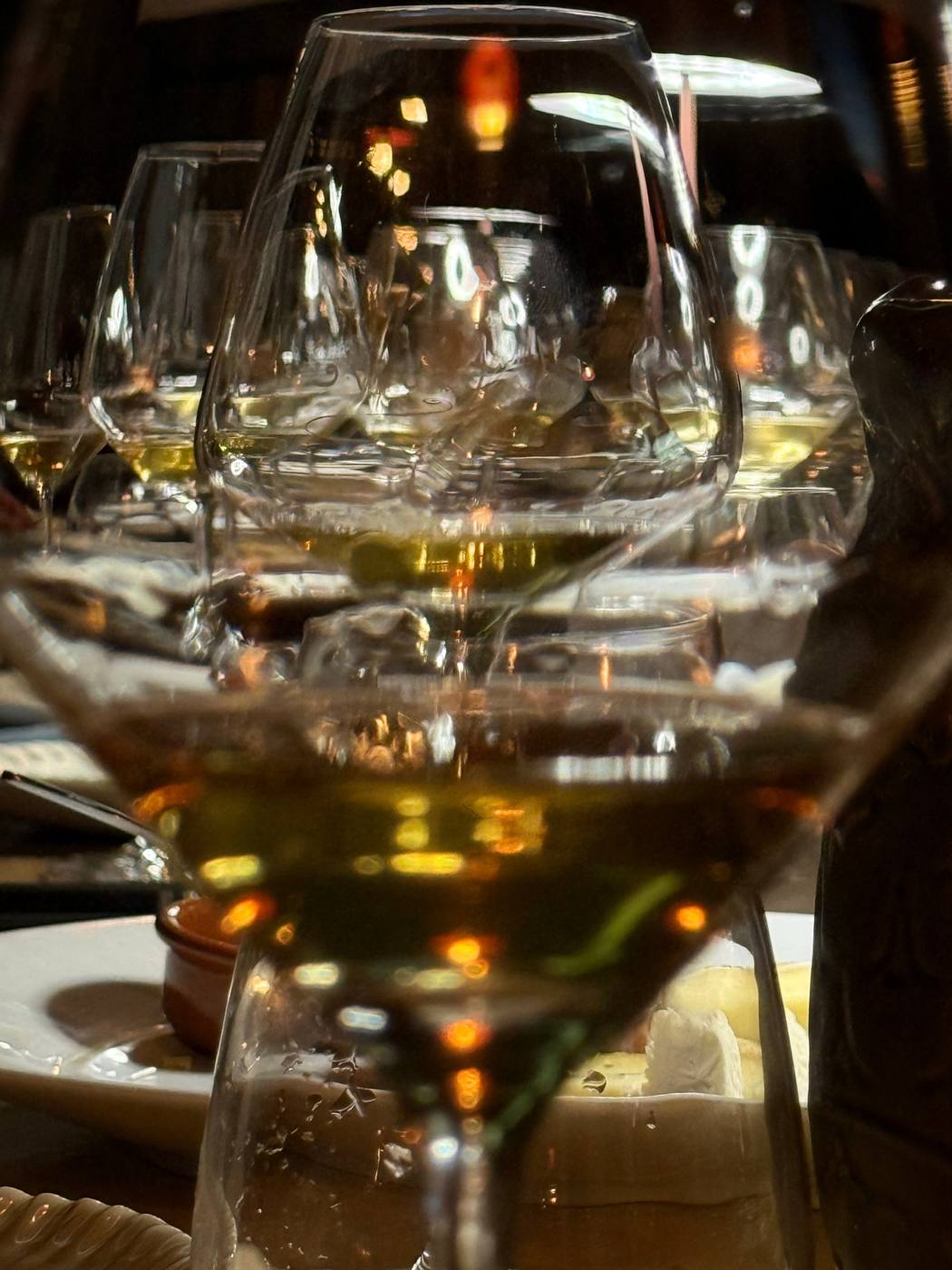
At 15–17 °C, opened a few hours ahead, in a fairly wide tulip glass.