2 min read
Vin Jaune and Japanese cuisine
Umami, fermentation, aged sake: between Vin Jaune and the Japanese table the affinities run deep and surprise.
Vin Jaune and Japanese cuisine seem to come from two distant worlds. Yet their affinities are many, and Japanese sommeliers are among the most curious about this wine.
The first link is aromatic. Sotolon, the molecule of walnut and curry that signs the goût de jaune, was first identified in aged sake by Japanese researchers in the 1970s. A lover of koshu, long-aged sake, will find familiar sensations in Vin Jaune.
The second link is umami. Aged six years in contact with yeast, Vin Jaune has a savoury, saline depth that answers dashi, miso, soy sauce and all the fermented preparations of Japanese cooking.
The pairings are many. Grilled eel, glazed in its sweet-salty sauce, finds an ideal counterpoint in Vin Jaune’s acidity. Fish marinated in white miso, such as saikyo-yaki, matches its walnut notes. Mushroom chawanmushi recalls the royales of classic French cooking. Sushi of aged fish, very fashionable in Tokyo, calls for its salinity.
Finally, the two cultures share the same relationship with time: six years and three months for Vin Jaune, shun, the exact moment of the season, for Japanese cuisine. The gastronomic meal of the French and washoku are both inscribed as intangible cultural heritage by UNESCO.
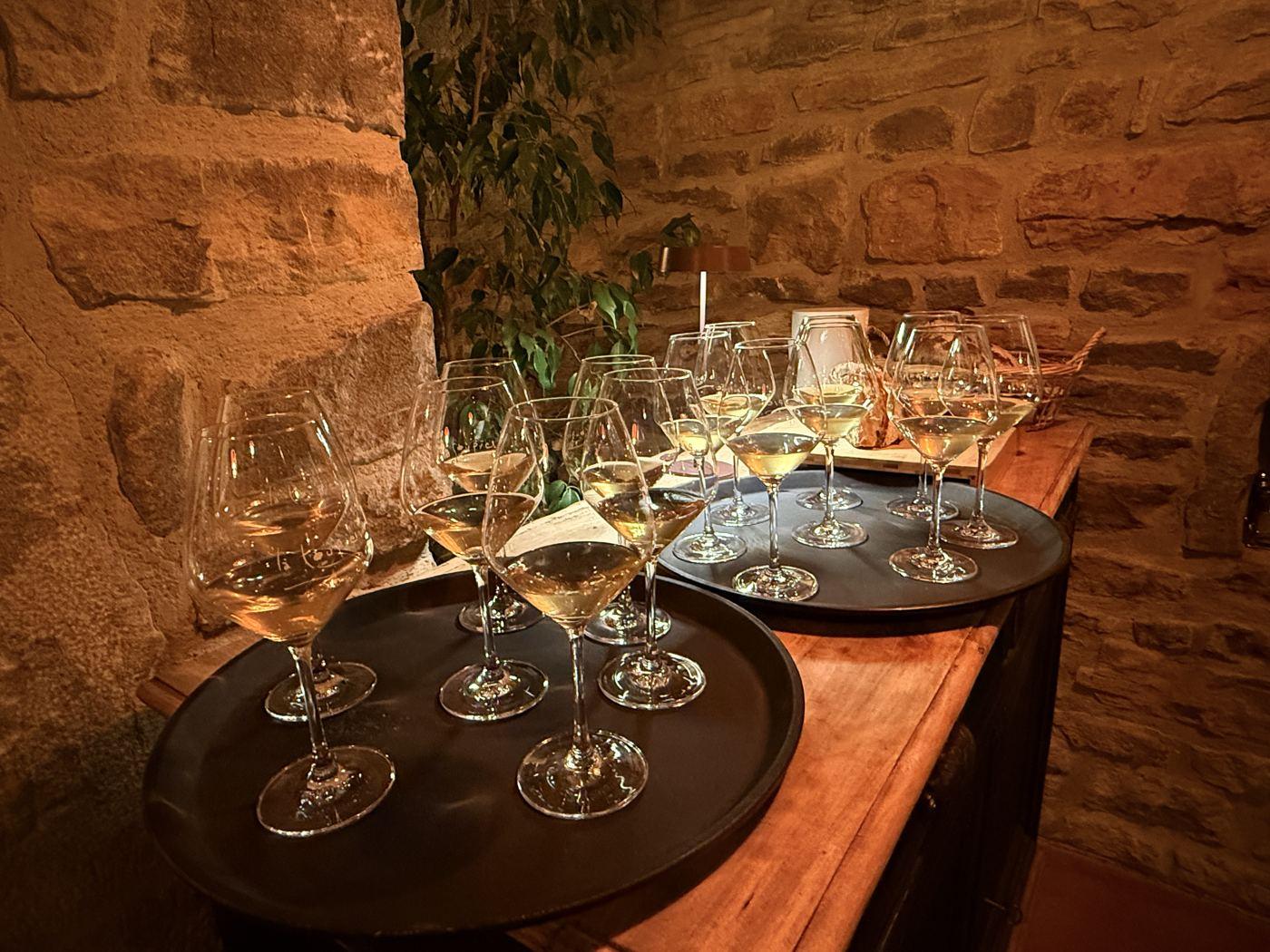
For a first discovery in Japan, a Vin Jaune of ten to fifteen years served at 15–17 °C in a fairly wide white-wine glass, with a few simple bites, is enough to move the guest: a piece of Comté, a skewer of grilled mushrooms, fish marinated in miso. Japanese sommeliers, used to subtle flavours and the nuances of umami, are often among the first to recognise this wine’s depth.
Antoine, Nicolas and Melchior