2 min read
How to read a Vin Jaune label
Appellation, vintage, clavelin, medallion: a few pointers to understand what a bottle of Vin Jaune is telling you.
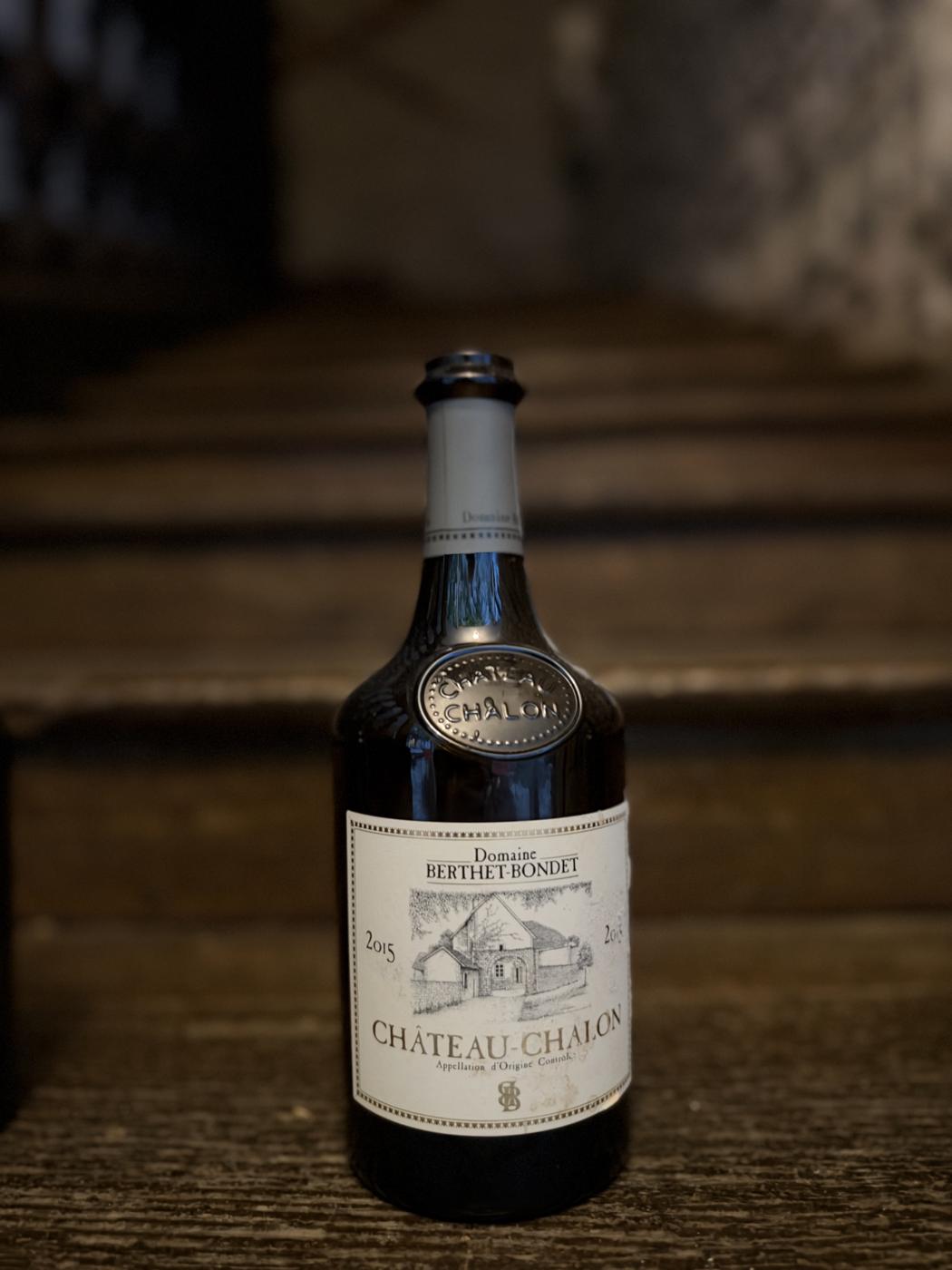
A Vin Jaune label gives several valuable pieces of information, provided you know how to read them. The first clue is the bottle itself: Vin Jaune must be sold in the clavelin, a squat 62-centilitre bottle with broad shoulders and a short neck. If the bottle is not a clavelin, the wine is not a Vin Jaune.
Next comes the appellation. Vin Jaune can only come from four appellations: you will read Arbois Vin Jaune, Côtes du Jura Vin Jaune, L’Étoile Vin Jaune or Château-Chalon. In the last case, the words “Vin Jaune” are not always written, since the appellation makes only this wine; the clavelin often bears an embossed medallion with its name. Arbois may also appear as Arbois-Pupillin, for the village of Pupillin.
The vintage gives the year of the harvest, not the year of release. Since ageing lasts until 15 December of the sixth year after the harvest, a Vin Jaune from the 2019 vintage could only be sold from 2026. An older vintage is therefore not necessarily an “old” wine in cellar terms: add six to seven years.
Finally, the name of the estate matters as much as the appellation. The words “mis en bouteille à la propriété” indicate a wine made and bottled by the grower. Alcohol content, the 62 cl volume and the health warning complete the label.
On the back, the back label often gives the grape, serving advice and sometimes the length of ageing. For export, the importer adds a back label in the local language, notably in Japan. Finally, beware of confusion: an oxidative Savagnin sold in a standard bottle is not a Vin Jaune, even if it was aged under the veil; only the clavelin and the appellation wording are proof.
Antoine, Nicolas and Melchior