2 min read
Vin Jaune and sherry: what are the differences?
Both age under a veil of yeast, but everything else sets them apart. A comparison between the Jura’s great wine and the wine of Andalusia.
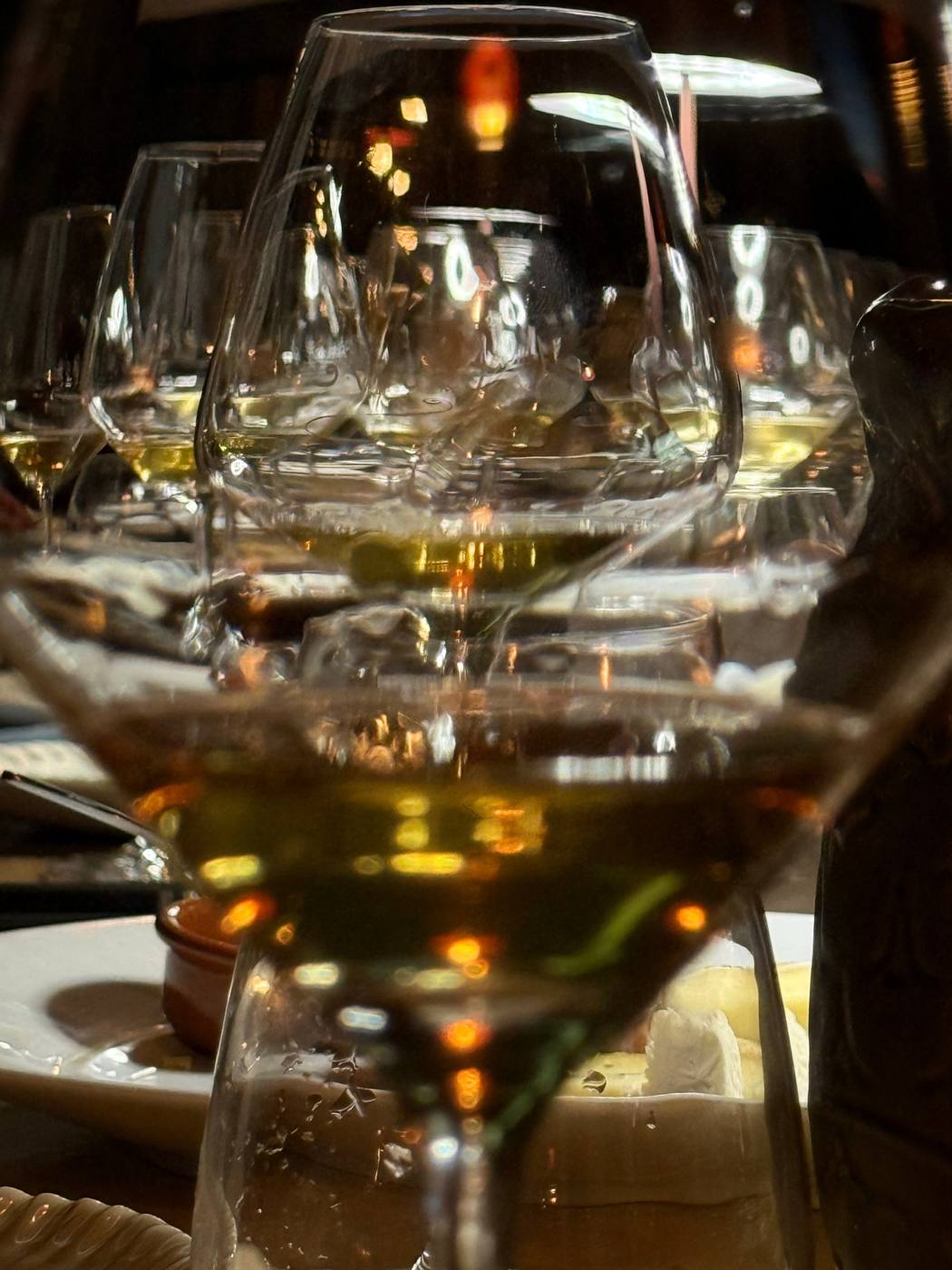
Vin Jaune is often compared to fino sherry, and the comparison has a basis: in both cases the wine ages in barrel under a veil of yeast that protects it from oxidation and gives it notes of walnut and almond. Yet the two wines are deeply different.
The first difference is origin. Vin Jaune comes from the Jura, in eastern France, and from Savagnin alone. Sherry comes from Andalusia, in southern Spain, mainly from the Palomino grape.
The second is alcohol. Sherry is a fortified wine: grape spirit is added before ageing. Vin Jaune is never fortified; its alcohol comes only from the grape.
The third is time and method. Sherry is aged in a solera, a system of stacked barrels in which wines of several years are blended: it generally has no vintage. Vin Jaune is a single-harvest wine that stays at least six years in the same barrel, never topped up, and proudly bears its vintage.
Finally, the climate differs. Andalusian bodegas are warm and humid, and the veil is permanent; in the Jura it lives with the seasons, more active in summer and resting in winter. The result: Vin Jaune keeps a livelier acidity, a saline tension and an exceptional capacity to age. Two cousins, two characters.
Cellar climate also makes a difference. In Andalusian bodegas, the gap between scorching summer and winter speeds up certain transformations; in the Jura, dry, airy cellars, often cut into limestone, offer gentler variations and a veil that works more slowly. Vin Jaune thus keeps a lively acidity and a saline tension rarely found elsewhere, and an ageing potential counted in decades.
Antoine, Nicolas and Melchior