2 min read
What does Vin Jaune taste like?
Walnut, curry, morel, salt: Vin Jaune surprises from the very first sniff. Here is how to describe the famous goût de jaune.
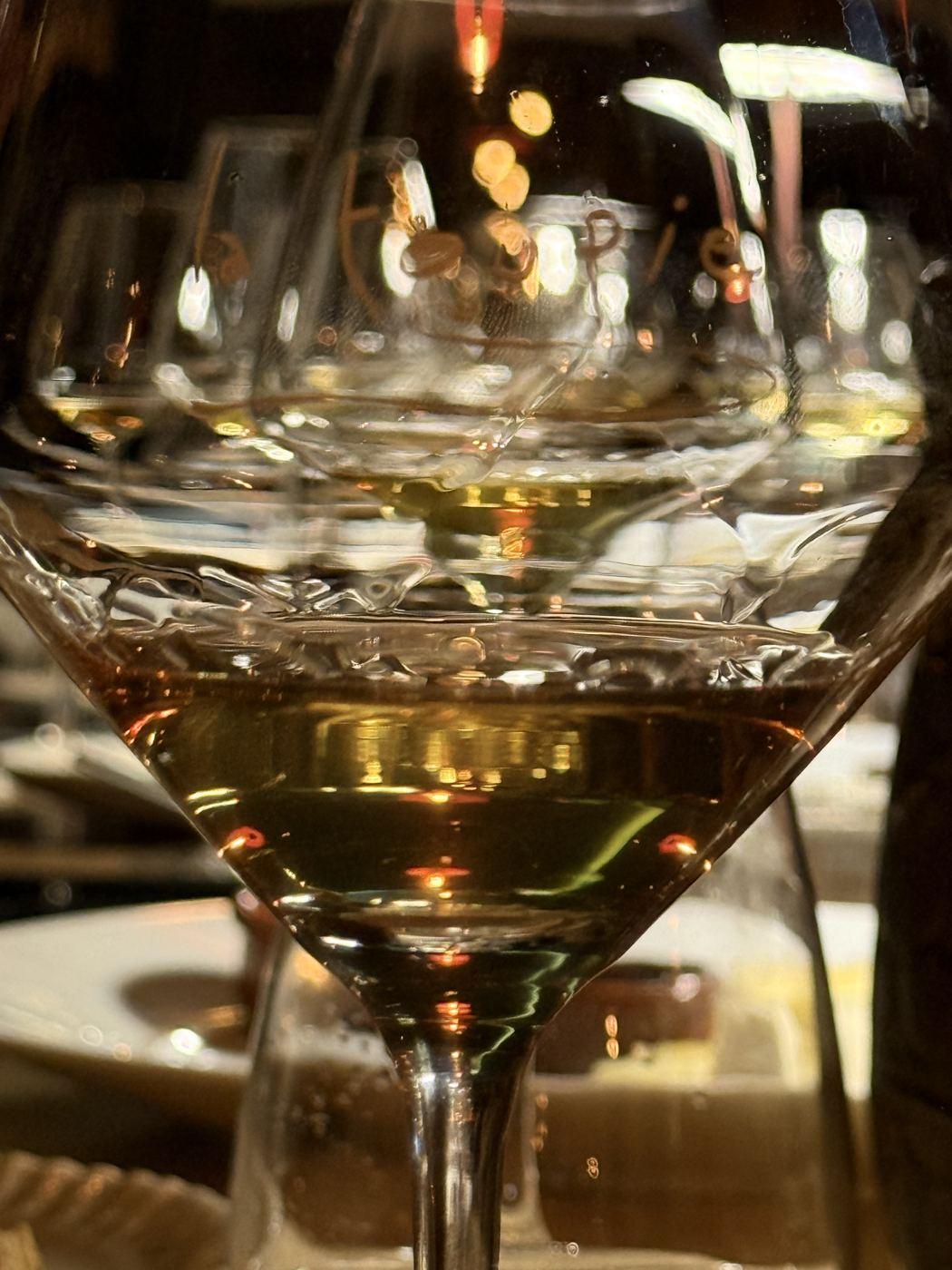
Vin Jaune has an instantly recognisable taste, known as the goût de jaune. It comes from ageing under the veil: the yeasts that cover the wine for years produce ethanal and pave the way for sotolon, two compounds behind its most characteristic aromas. An ordinary white wine contains a few tens of milligrams of ethanal per litre; a Vin Jaune can contain several hundred.
On the nose you first find fresh walnut and apple, then, after a few minutes in the glass, spicy notes of curry, fenugreek and cardamom, toasted almond, morel and forest floor. With age come beeswax, honey, coffee or blond tobacco. The nose is powerful but never heavy.
On the palate Vin Jaune is dry: it contains almost no sugar. Its main feature is a lively acidity that makes the mouth water, paired with a saline sensation that lingers on the lips. It is both broad and taut, with an almost oily texture. The finish is unusually long: tasters speak of a “peacock’s tail” to describe aromas that open out and often last more than a minute.
The taste varies with the appellation, the estate, the cellar and the age of the wine. A young Vin Jaune is livelier and marked by green walnut; an older one is rounder and spicier. It is a wine that can puzzle at the first sip, and then is never forgotten.
Sotolon deserves special attention. Depending on its concentration, it recalls curry, fenugreek, walnut or a hint of caramel. It forms from the ethanal produced by the veil and alpha-ketobutyric acid, and keeps forming in the bottle, which explains the aromatic richness of old vintages. But it is only one piece of the bouquet: other molecules from fermentation, wood and the grape complete the picture.
Antoine, Nicolas and Melchior