2 min read
What is Vin Jaune?
A dry white wine from the Jura, aged over six years in barrel, at least five of them under a veil of yeast: Vin Jaune is like no other wine. Definition, rules and singularities.
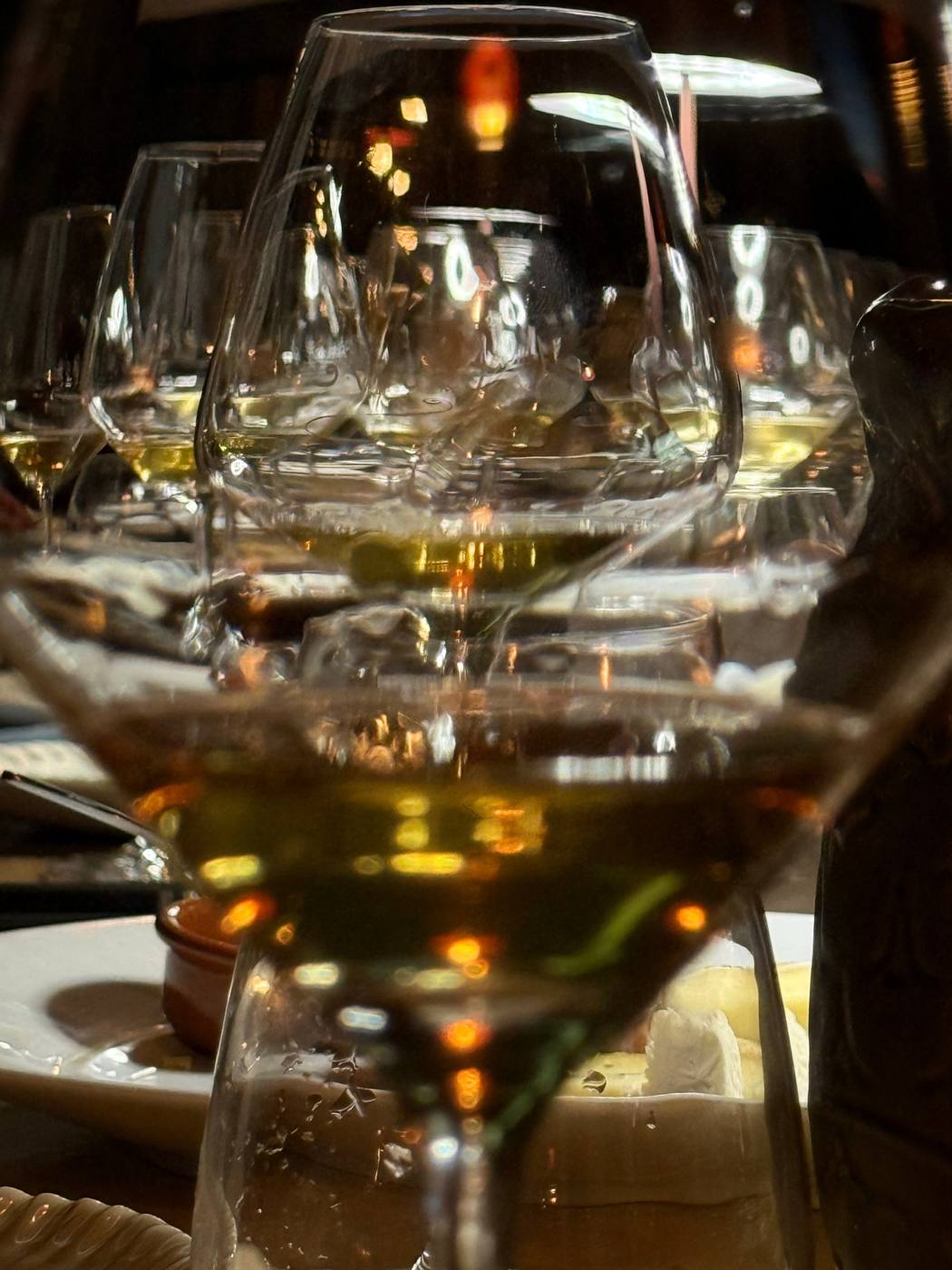
Vin Jaune is a dry white wine made only in the Jura, in eastern France. It comes from a single grape, Savagnin, and is aged for at least six years in oak barrels without ever being topped up. During this ageing a veil of yeast forms on the surface of the wine: it protects it from harsh oxidation and gives it its unique taste, which the people of the Jura call the “goût de jaune”.
It is not an appellation but a designation, reserved for four appellations d’origine contrôlée: Château-Chalon, which makes nothing but Vin Jaune, Arbois, Côtes du Jura and L’Étoile. The rules are strict: ageing lasts until 15 December of the sixth year after harvest, including at least sixty months in barrel under the veil, and the wine must be bottled in the clavelin, a squat 62-centilitre bottle reserved for it.
Unlike sherry, to which it is often compared, Vin Jaune is not fortified: no alcohol is added. Its power comes from the grape and from time. Its colour ranges from yellow gold to amber gold; its nose recalls fresh walnut, curry, morel and toasted almond; its palate is lively, saline and exceptionally long.
Rare, slow to make and able to age for decades, even centuries, Vin Jaune is often called “the king of wines and the wine of kings”. It is the great white wine for ageing of the Jura.
Vin Jaune is also a wine of patience for the grower. For more than six years, the barrels tie up cellar space and capital with no guarantee of success: some never reach the expected quality and are set aside. At the end, the successful barrels are tasted and blended, because the best barrel on its own is often less complete than the blend. This share of risk, as much as the time involved, is what makes Vin Jaune rare.
Antoine, Nicolas and Melchior